The Tax Working Group Makes Predictable Recommendations

The Tax Working Group (TWG) has reached the conclusion that there should be a corporate tax cut. This finding was not surprising considering it was set up for this purpose. It is said that this will bring more investment money into Australia. Considering the Australia currency is already far too strong and is slowing down exports because they are too expensive on the world market, the last thing we need is more money flowing in.

This can be funded by reducing tax offsets for R&D development, it says. What a silly idea this is. Reduce R&D and we will have nothing new to sell. This is like robbing Peter to pay Paul. These are the same companies who will enjoy the corporate tax cut. By cutting back on gas, oil, agriculture and transport tax write offs, there will no overall benefit. Furthermore, ending tax deductions for multinationals will slow foreign investment not improve it.

These inquiries are often a waste of public money. They make recommendations that are usually only the "moving of furniture around the room". Nothing fresh and forward looking is ever suggested by them. The TWG even says the government will collect more revenue by these changes, so it can lower the general tax rate. Great, everyone pays less tax.

What a wonderful state of affairs this will be. Of course, we will pay the "same" tax to government, whether it is direct tax or indirect tax. The TWG are in dreamland.

. . . . . . . . . . . . . . . . . .
Economics

Chicken Tippler

"Even a chicken likes a tipple now and again."
. . . . . . . . . . . . . . . . . . . . . .
Funny Animal Photos

Australia's Pipistrelle Bat Will Be Extict Within a Year

Australia is about to lose the Christmas Island pipistrelle bat forever. Wildlife experts say the government is not doing enough. Only 20 of the small bats remain on an island in the Indian Ocean off the coast of Western Australia. The small group are staying together under the bark of a tree.

Watchers say the only answer is to collect all of them and try to breed them in captivity. Otherwise, they will be lost. The government has offered to set up a breeding program for a related small bat, but this will not save the pipistrelle. A zoologist, Mr Penney, says the species will not exist this time next year.

Scientists are planning to collect the bats and set up a breeding program themselves, ignoring the government. The government is not paying attention to the scientists, so that is what will happen.
. . . . . . . . . . . . . . . . . .
Conservation

Dog Tired

"It's really tiring this eating business."
. . . . . . . . . . . . . . . . . . . . . .
Funny Animal Photos

Triathletes Need to Consume Carbohydrates

This subject is topical at the moment with the Olympic Games in full swing. The triathlon is a popular sport where spectators admire the determination of athletes to push through the pain barrier and keep on going to the finish. Little work has been done on understanding how much damages is done to the body.

The half triathlon also called the intermediate or Standard distance run at the Olympics has become popular with many who just want to keep fit. Tests show significant reduction in knee extensor and flexure muscle strength at the end of an event. The ability to jump up off the ground is also reduced.

Considering dehydration and stores of carbohydrates which have been lost it is no surprise that weakness continues for some time after competing. However, dehydration was only minor in tested athletes. It seems the fat and muscle loss is the main cause. Participants in triathlons should concentrate on ingesting carbohydrates as well as fluid. Keeping blood glucose high has been found to maintain muscle force. Male athletes improved their race times by consuming carbohydrates. This was not the case for females. The reason for this is not clearly understood. Female metabolism must preserve carbohydrate stores even during strenuous exercise, but carbohydrate intake is recommended for women during an event.
. . . . . . . . . . . . . . . . . .
Sport

Geckos Cannot "Stick" to Wet Surfaces

Geckos are being studied to find out how they can climb across ceilings without falling off. Their toe pads can support weight equivalent to two people.

Like many animals with the capacity to "stick" to things, the main reason they can hold on is the many tiny hairs on their suckers. A hair is further divided into hundreds of gripping setae. The attraction between molecules in the surface and the millions of setae add up to significant sticking power.

Water is their enemy. If a surface is wet they fall off. Even on a dry surface, when gecko's feet are soaked in water they cannot hold on. Water tends to stop the superhydrophobic attracted between molecules. This is why geckos lose their wonderful climbing ability. In the wild they would be open to attack from predators in wet conditions. Furthermore, the hope of creating a new adhesive based on geckos is dashed.
. . . . . . . . . . . . . . . . . .
Science

Hampster Master Of Ceremony

"Let's all be upstanding for a toast to the bride and groom."
. . . . . . . . . . . . . . . . . . . . . .
Funny Animal Photos

Dangerous Chemicals in Household Products

Be careful what you put on your skin - the skin absorbs chemicals on its surface. In other words your body consumes and ingests things like soap and toxins in engine oil, etc. Little research is done on this serious issue. In New Zealand a dangerous chemical which lowers IQ in children has been found in sunscreens. It is as damaging as lead paint.

Even spraying the chemical into the air where is can be breathed in and ingested can lower IQ. Piperonyl butoxide is also present in insect spray. Cancer Society products even contain the substance.

Low vitamin D has been blamed for many diseases when in fact it could be trace chemical in commonly used household goods. If vitamin D deficiency is causal then people in temperate countries would have higher cancer, Alzheimer's, heart disease, autism, depression and ADHD than those in tropical regions. This is only true for some of these illnesses. Too say 31 per cent of Australians in this hot country are deficient is ridiculous.
. . . . . . . . . . . . . . . . . .
Society

Smarty Cat

"You can call me smartypants, if you like. Heh, heh!"
. . . . . . . . . . . . . . . . . . . . . .
Funny Animal Photos

The Energy Crisis Has Been Solved

The energy crisis has been solved - no more pollution or high fuel prices! Just get a "slave" to pedal away all day while you enjoy the electricity generated. A joke? No this is no joke. Scientists are using mice with special nanowire jackets to create power while running around in their exercise wheels.

But this is just the beginning. The jackets will be made "human" size. So you can generate electricity to run your iPod for example. Jackets will even be made to put on your dog. Taking a dog for a walk will no longer be a waste of human time.

The nanowire generators can be put on anything that moves or vibrates. They can be put on bicycles, cars, air conditioners, heaters and so on. It will take some time, however, to make them smaller and cheaper. Research on this is being done.
. . . . . . . . . . . . . . . . . .
Society

The Aim Is to Eradicate Polio

Smallpox was a serious problem in the 20th century. The World Health Organization declared in 1979 that smallpox was no longer a danger to the world's population. The aim has been to "silence" other diseases. It was hoped that polio could also be eradicated, but a stubborn region for this has remained in Pakistan. More cases were identified in Pakistan than in any other country in 2011.

The Edhi Foundation, a major charity, and the Pakistan government are working with the Global Polio Eradication Initiative to target the disease. Cases have fallen so that now Nigeria is the main trouble spot. There are fears that the progress could be short lived and figures could rise again.

Polio spreads far more easily than smallpox. The smallpox vaccine lasts for five years and is very effective. For the war on polio to be won, just about every person must be vaccinated. As the disease can only spread from person to person this goal must be achieved.
. . . . . . . . . . . . . . . . . .
Health

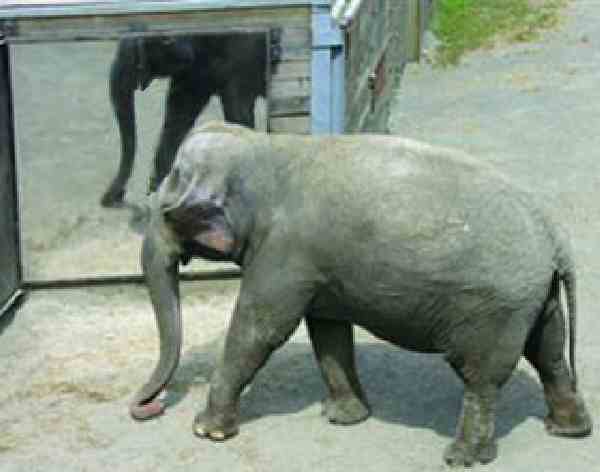
Elephant in the Mirror

"Mirror, mirror on the wall, who's the fairest of them all?"
. . . . . . . . . . . . . . . . . . . . . .
Funny Animal Photos

Those in Developing Countries Suffer More Depression

Only Western people get depressed due to their fast way of living - right? Unfortunately, this is not the case. Those in developing countries are also stressed as they struggle to survive. While Westerners do not have to worry too much about securing food, getting adequate sustenance for themselves and families is in many cases the main priority for the Third World population.

An examination of depression in developing countries by the University of Queensland on 480,000 subjects highlights this disturbing finding. People in Third World nations just do not go to doctors for treatment. The survey in 91 countries shows that stress is common across the board.

There is a fine line between depression and stress. Many would say they are the same thing. Anxiety was found to be higher in the USA with depression there being the lowest. Examining depression specifically, developing countries had more than twice the rate of the US - 9 per cent.

Political and military conflict was the main factor in causing depression. Getting correct data was the issue for researchers. Many surveyed didn't differentiate between anxiety and depression. They said they experienced mental suffering. If we in the West have difficulty in clearly defining stress and depression, it must be really challenging for those in developing countries.
. . . . . . . . . . . . . . . . . .
Society

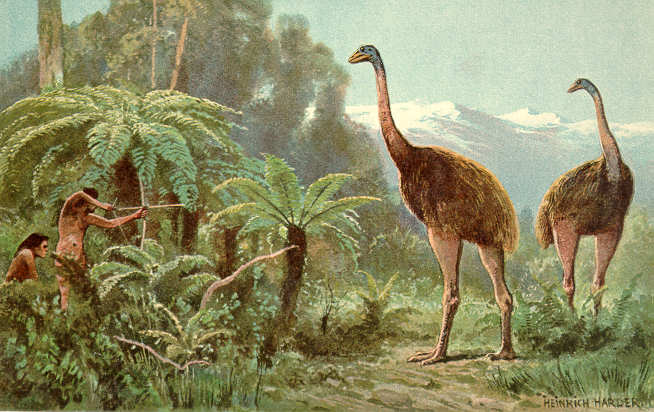
Scientists Are Studying New Zealand's Extinct Moa Bird

It seems we can study what animals looked like even though they are extinct. Australian and New Zealand scientists are studying prehistoric feathers to find out what birds were like. DNA has been obtained from the extinct Moa bird of New Zealand from feathers 2,500 years old. Moa are thought to have been still alive 1200 years ago It was 8 feet tall and could not fly. Material has been gleaned from three types of Moa: the stout legged; the heavy footed; and the upland Moa.

Somehow they have worked out that wing feathers had speckled white tips. This was to camouflage the bird from predators. The very large Haast eagle once existed that preyed on them. It is claimed that because the plumage of other flightless NZ birds is dull with speckled tips this idea is valid.

The scientists plan to get feathers from the end of the quill and further down the quill to compare coloration. It is hoped the findings will enable researchers to correctly reconstruct life-like models of extinct birds.

. . . . . . . . . . . . . . . . . .
Ornithology

Opioid Addiction Caused by Long Wait for Operation

The medical community has just noticed a fact that many have known for years - Waiting a long time for an operation can lead to opioid addiction. It is easy to get opiates from GPs just by telling them that you are in excruciating pain and an operation is a long way off. Shane Jackson president of the Tasmanian Pharmaceutical Society says money should be spent on more pain management specialist. This is a waste considering they only tell patients to take paracetamol that does not stop strong pain.

Setting up a data base will only lead to patients being denied opiates so they experience more pain and suffering. Blame the patients has always been easy to do. A data base will stop people getting morphine derivatives from all GPs. This creates an added problem. The solution is more medical staff and facilities to do more operations.

Reducing the risk of opiate addiction can be solved by denying patients access to such drugs, Though they may turn up in the hospital emergency department for an overdoes of paracetamol. When people are in serious pain rationality goes out the window. When the cause of a problem is obvious why do researchers take the shortest path to "sooth" the situation?
. . . . . . . . . . . . . . . . . .
Health

Bird Likes Real Cheddar Cheese

"Great, real Cheddar cheese?"
. . . . . . . . . . . . . . . . . .
Funny Animal Photos

Synthetic Heart Repair Conduit

Treatment for heart disease is advancing at a rapid pace. Soon, a tiny piece of artery will be removed from a patient and a new heart conduit will be formed. This is for minor problems in the heart, less that 5mm wide.

Conduits are also being made from synthetic materials. Toleration of foreign substances is not a problems because it degrades quickly. They are used to go over the outside of a graft to stop bleeding. The synthetic conduits are made of a fine poly-(glycerol sebacate) net coated with polycaprolactone and the anticoagulant heparin. Mesh holes are too small for blood to pass through. Nothing of the implant remains after three months. A new structure of endogenous cells with M2 macrophages (which reduces inflammation) remains.

Though tests have only been done on rats, use in humans will probably be just as successful. Large grafts using the material will be done to see if this is feasible. This will be a welcome advance in medicine. A graft made of the body's own tissue will last much longer and patients will not need to be treated again for obstruction in the new graft.
. . . . . . . . . . . . . . . . . .
Health

Water is the Problem not Oil

We are obsessed with the oil crisis. So much so that we fail to see other problems that face us in the near future. For example, what about fresh drinking water. If nothing is done soon, the world will be in crisis. Even countries with cold climates, in Europe, are facing a shortage of potable water because of the high population density. As people become Westernized they consume more water. They change from bathing when they can, to having showers every day.

Production oil also impacts on the availability of water. it takes 2.5 liters of water to produce every liter of oil. Even growing bio fuels puts pressure on water, with a thousand liters of water needed to make a liter of bio fuel. The modern way of life is water "heavy":


Wealthy people use 3,000 liters of water each day to live their lives. More drought in the world is putting prices of everything up. When water gets short it does so locally. Moving water from one place to another in bulk is problematical. In the short term it is possible, but in the longer term it is not. Food production will fall behind what is needed over the next two decades if nothing is done.

The oil crisis and carbon pollution are problems but a shortage of water will hurt most of all.

. . . . . . . . . . . . . . . . . .
Society