 "You can call me smartypants, if you like. Heh, heh!"
The Energy Crisis Has Been Solved
The energy crisis has been solved - no more pollution or high fuel prices! Just get a "slave" to pedal away all day while you enjoy the electricity generated. A joke? No this is no joke. Scientists are using mice with special nanowire jackets to create power while running around in their exercise wheels.
But this is just the beginning. The jackets will be made "human" size. So you can generate electricity to run your iPod for example. Jackets will even be made to put on your dog. Taking a dog for a walk will no longer be a waste of human time.
The nanowire generators can be put on anything that moves or vibrates. They can be put on bicycles, cars, air conditioners, heaters and so on. It will take some time, however, to make them smaller and cheaper. Research on this is being done.
But this is just the beginning. The jackets will be made "human" size. So you can generate electricity to run your iPod for example. Jackets will even be made to put on your dog. Taking a dog for a walk will no longer be a waste of human time.
The nanowire generators can be put on anything that moves or vibrates. They can be put on bicycles, cars, air conditioners, heaters and so on. It will take some time, however, to make them smaller and cheaper. Research on this is being done.
 http://www.adventure--australia.blogspot.com/
http://www.tysaustralia.blogspot.com/
http://www.feeds.feedburner.com/AdventureAustralia
http://www.technorati.com/blogs/
http://adventure--australia.blogspot.com
Society

The Aim Is to Eradicate Polio
Smallpox was a serious problem in the 20th century. The World Health Organization declared in 1979 that smallpox was no longer a danger to the world's population. The aim has been to "silence" other diseases. It was hoped that polio could also be eradicated, but a stubborn region for this has remained in Pakistan. More cases were identified in Pakistan than in any other country in 2011.
The Edhi Foundation, a major charity, and the Pakistan government are working with the Global Polio Eradication Initiative to target the disease. Cases have fallen so that now Nigeria is the main trouble spot. There are fears that the progress could be short lived and figures could rise again.
Polio spreads far more easily than smallpox. The smallpox vaccine lasts for five years and is very effective. For the war on polio to be won, just about every person must be vaccinated. As the disease can only spread from person to person this goal must be achieved.
The Edhi Foundation, a major charity, and the Pakistan government are working with the Global Polio Eradication Initiative to target the disease. Cases have fallen so that now Nigeria is the main trouble spot. There are fears that the progress could be short lived and figures could rise again.
Polio spreads far more easily than smallpox. The smallpox vaccine lasts for five years and is very effective. For the war on polio to be won, just about every person must be vaccinated. As the disease can only spread from person to person this goal must be achieved.
http://www.adventure--australia.blogspot.com/http://www.tysaustralia.blogspot.com/
http://www.feeds.feedburner.com/AdventureAustralia
http://www.technorati.com/blogs/
http://adventure--australia.blogspot.com
Health
Those in Developing Countries Suffer More Depression
Only Western people get depressed due to their fast way of living - right? Unfortunately, this is not the case. Those in developing countries are also stressed as they struggle to survive. While Westerners do not have to worry too much about securing food, getting adequate sustenance for themselves and families is in many cases the main priority for the Third World population.
An examination of depression in developing countries by the University of Queensland on 480,000 subjects highlights this disturbing finding. People in Third World nations just do not go to doctors for treatment. The survey in 91 countries shows that stress is common across the board.
There is a fine line between depression and stress. Many would say they are the same thing. Anxiety was found to be higher in the USA with depression there being the lowest. Examining depression specifically, developing countries had more than twice the rate of the US - 9 per cent.
Political and military conflict was the main factor in causing depression. Getting correct data was the issue for researchers. Many surveyed didn't differentiate between anxiety and depression. They said they experienced mental suffering. If we in the West have difficulty in clearly defining stress and depression, it must be really challenging for those in developing countries.
An examination of depression in developing countries by the University of Queensland on 480,000 subjects highlights this disturbing finding. People in Third World nations just do not go to doctors for treatment. The survey in 91 countries shows that stress is common across the board.
There is a fine line between depression and stress. Many would say they are the same thing. Anxiety was found to be higher in the USA with depression there being the lowest. Examining depression specifically, developing countries had more than twice the rate of the US - 9 per cent.
Political and military conflict was the main factor in causing depression. Getting correct data was the issue for researchers. Many surveyed didn't differentiate between anxiety and depression. They said they experienced mental suffering. If we in the West have difficulty in clearly defining stress and depression, it must be really challenging for those in developing countries.
http://www.adventure--australia.blogspot.com/http://www.tysaustralia.blogspot.com/
http://www.feeds.feedburner.com/AdventureAustralia
http://www.technorati.com/blogs/
http://adventure--australia.blogspot.com
Society
Scientists Are Studying New Zealand's Extinct Moa Bird
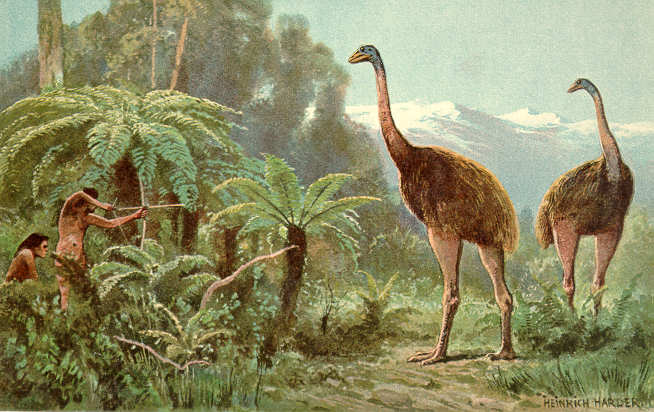
Somehow they have worked out that wing feathers had speckled white tips. This was to camouflage the bird from predators. The very large Haast eagle once existed that preyed on them. It is claimed that because the plumage of other flightless NZ birds is dull with speckled tips this idea is valid.
The scientists plan to get feathers from the end of the quill and further down the quill to compare coloration. It is hoped the findings will enable researchers to correctly reconstruct life-like models of extinct birds.
http://www.adventure--australia.blogspot.com/http://www.tysaustralia.blogspot.com/
http://www.feeds.feedburner.com/AdventureAustralia
http://www.technorati.com/blogs/
http://adventure--australia.blogspot.com
Ornithology
Opioid Addiction Caused by Long Wait for Operation
The medical community has just noticed a fact that many have known for years - Waiting a long time for an operation can lead to opioid addiction. It is easy to get opiates from GPs just by telling them that you are in excruciating pain and an operation is a long way off. Shane Jackson president of the Tasmanian Pharmaceutical Society says money should be spent on more pain management specialist. This is a waste considering they only tell patients to take paracetamol that does not stop strong pain.
Setting up a data base will only lead to patients being denied opiates so they experience more pain and suffering. Blame the patients has always been easy to do. A data base will stop people getting morphine derivatives from all GPs. This creates an added problem. The solution is more medical staff and facilities to do more operations.
Reducing the risk of opiate addiction can be solved by denying patients access to such drugs, Though they may turn up in the hospital emergency department for an overdoes of paracetamol. When people are in serious pain rationality goes out the window. When the cause of a problem is obvious why do researchers take the shortest path to "sooth" the situation?
Setting up a data base will only lead to patients being denied opiates so they experience more pain and suffering. Blame the patients has always been easy to do. A data base will stop people getting morphine derivatives from all GPs. This creates an added problem. The solution is more medical staff and facilities to do more operations.
Reducing the risk of opiate addiction can be solved by denying patients access to such drugs, Though they may turn up in the hospital emergency department for an overdoes of paracetamol. When people are in serious pain rationality goes out the window. When the cause of a problem is obvious why do researchers take the shortest path to "sooth" the situation?
http://www.adventure--australia.blogspot.com/http://www.tysaustralia.blogspot.com/
http://www.feeds.feedburner.com/AdventureAustralia
http://www.technorati.com/blogs/
http://adventure--australia.blogspot.com
Health

Synthetic Heart Repair Conduit
Treatment for heart disease is advancing at a rapid pace. Soon, a tiny piece of artery will be removed from a patient and a new heart conduit will be formed. This is for minor problems in the heart, less that 5mm wide.
Conduits are also being made from synthetic materials. Toleration of foreign substances is not a problems because it degrades quickly. They are used to go over the outside of a graft to stop bleeding. The synthetic conduits are made of a fine poly-(glycerol sebacate) net coated with polycaprolactone and the anticoagulant heparin. Mesh holes are too small for blood to pass through. Nothing of the implant remains after three months. A new structure of endogenous cells with M2 macrophages (which reduces inflammation) remains.
Though tests have only been done on rats, use in humans will probably be just as successful. Large grafts using the material will be done to see if this is feasible. This will be a welcome advance in medicine. A graft made of the body's own tissue will last much longer and patients will not need to be treated again for obstruction in the new graft.
Conduits are also being made from synthetic materials. Toleration of foreign substances is not a problems because it degrades quickly. They are used to go over the outside of a graft to stop bleeding. The synthetic conduits are made of a fine poly-(glycerol sebacate) net coated with polycaprolactone and the anticoagulant heparin. Mesh holes are too small for blood to pass through. Nothing of the implant remains after three months. A new structure of endogenous cells with M2 macrophages (which reduces inflammation) remains.
Though tests have only been done on rats, use in humans will probably be just as successful. Large grafts using the material will be done to see if this is feasible. This will be a welcome advance in medicine. A graft made of the body's own tissue will last much longer and patients will not need to be treated again for obstruction in the new graft.
http://www.adventure--australia.blogspot.com/http://www.tysaustralia.blogspot.com/
http://www.feeds.feedburner.com/AdventureAustralia
http://www.technorati.com/blogs/
http://adventure--australia.blogspot.com
Health

Water is the Problem not Oil
We are obsessed with the oil crisis. So much so that we fail to see other problems that face us in the near future. For example, what about fresh drinking water. If nothing is done soon, the world will be in crisis. Even countries with cold climates, in Europe, are facing a shortage of potable water because of the high population density. As people become Westernized they consume more water. They change from bathing when they can, to having showers every day.
Production oil also impacts on the availability of water. it takes 2.5 liters of water to produce every liter of oil. Even growing bio fuels puts pressure on water, with a thousand liters of water needed to make a liter of bio fuel. The modern way of life is water "heavy":

Wealthy people use 3,000 liters of water each day to live their lives. More drought in the world is putting prices of everything up. When water gets short it does so locally. Moving water from one place to another in bulk is problematical. In the short term it is possible, but in the longer term it is not. Food production will fall behind what is needed over the next two decades if nothing is done.
The oil crisis and carbon pollution are problems but a shortage of water will hurt most of all.
http://www.adventure--australia.blogspot.com/http://www.tysaustralia.blogspot.com/
http://www.feeds.feedburner.com/AdventureAustralia
http://www.technorati.com/blogs/
http://adventure--australia.blogspot.com
Society
Times Get Tougher for Sole Mothers
There is little sympathy for sole mothers from others in society or government. Social security payments have been tightened up by the federal Government. If sole mothers do not work they must go back to school, probably learning something that is useless for their future.
Not many full-time workers have brought up children as well without paying someone else to care for their babies and toddlers. Older children are consistently being left alone as mothers do some sort of part-time work. This is reality. Part-time jobs do not pay well enough to provide money for carers. When Single mothers come home they not only look after their children, they must do all the household chores as well as do repair work to the home.
The government's new harsher policy comes into force next January. Welfare payments will fall. Even those working part-time will lose some of the part-payment they get from social security. Children will be the real losers as food and heating/cooling are reduced. As the number of sole parents below the poverty line increases from 10 per cent to 20 per cent, things will be tough. The loss of $40 a week from next year for those fully reliant on welfare payments is a massive amount. Two thousand dollars a year is a significant fall in income.
Not many full-time workers have brought up children as well without paying someone else to care for their babies and toddlers. Older children are consistently being left alone as mothers do some sort of part-time work. This is reality. Part-time jobs do not pay well enough to provide money for carers. When Single mothers come home they not only look after their children, they must do all the household chores as well as do repair work to the home.
The government's new harsher policy comes into force next January. Welfare payments will fall. Even those working part-time will lose some of the part-payment they get from social security. Children will be the real losers as food and heating/cooling are reduced. As the number of sole parents below the poverty line increases from 10 per cent to 20 per cent, things will be tough. The loss of $40 a week from next year for those fully reliant on welfare payments is a massive amount. Two thousand dollars a year is a significant fall in income.
http://www.adventure--australia.blogspot.com/http://www.tysaustralia.blogspot.com/
http://www.feeds.feedburner.com/AdventureAustralia
http://www.technorati.com/blogs/
http://adventure--australia.blogspot.com
Society
Views on Climate Change Has Altered in the US
The common view on climate change (CC) has shifted. This is due to the shocking weather in the US over the last few years. A survey of respondents at Yale University shows those who believe that global warming is happening has increased from 57 per cent in 2010 to 66 per cent currently.
People with common views have been identified:
People with common views have been identified:
- Alarmed - 13%
- Concerned - 26%
- Cautious - 29%
- Dismissive - 10%
- Disengaged - 6%
- Doubtful - 15%
These figures were obtained in 2011, a year before the Yale study which noted the changes as follows:
- Alarmed - 13%
- Concerned - 26%
- Cautious - 34%
- Dismissive - 10%
- Disengaged - 2%
- Doubtful - 15%
Other important opinions in each group include:
- Alarmed - 57% = Extremely sure CC is happening
- Dismissive - 94% = Strongly dstrust Pres. Obama
- ........"....- 70% = Strongly distrust climate scientists
- All Respondents - 58% = US could afford to act on CC
- ........"..........- 79% = Solar & wind power are answers
People have to directly "live" dramatic change in weather for their view to alter. This is the experience in the US and it is probably the same elsewhere. As bad weather occurrences become permanent the global common opinion will be that damage has been done to the world's climate by human activity.
http://www.adventure--australia.blogspot.com/http://www.tysaustralia.blogspot.com/
http://www.feeds.feedburner.com/AdventureAustralia
http://www.technorati.com/blogs/
http://adventure--australia.blogspot.com
Science
Subscribe to:
Comments
(
Atom
)
