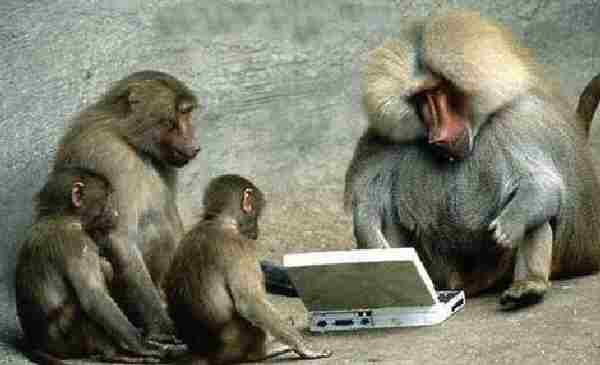
Humans aren't that special. It was once thought that people were superior to chimpanzees because humans had feelings and showed love. We all know now that chimps do have these propensities. Other animals weren't even considered in the "advanced" creature stakes. Time has shown that many animals use tools to find food.
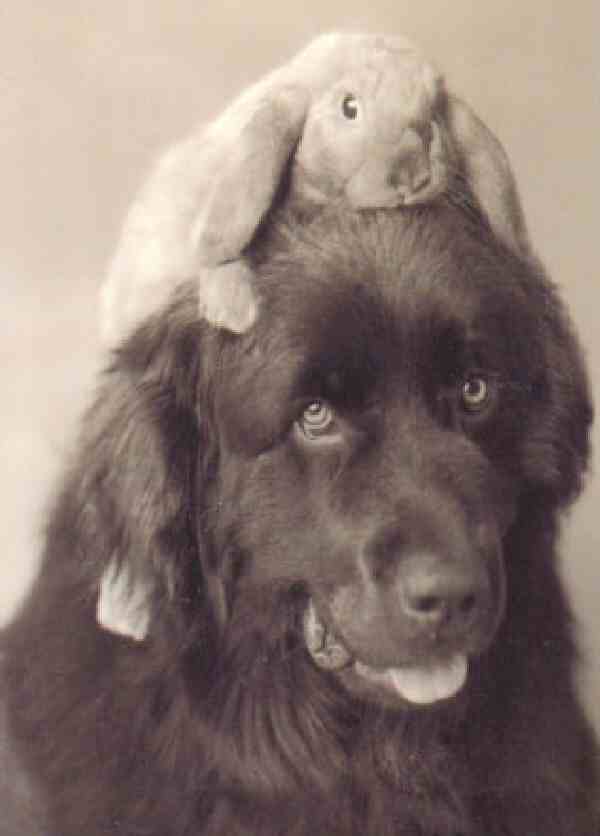
Pets such as dogs tend to mimic their owners. They say you grow like your partner and if your companion is a dog then the dog copies you, and heaven forbid you copy the dog. So strong is this bond that dogs will actually give up food rewards to do what their owners do.
Research had two group of pet dogs. Their owners went on hands and knees and opened a sliding door with heads and closed hands. One group of dogs was rewarded for opening the door. The other group was reward with food for not doing what their owners did. All dogs opened the door - foregoing the food reward.
Clearly dogs learn like humans. They copy. Dogs in the test were of many breeds, so intelligence was not a factor. Furthermore, what does a dog do when it sees a human yawn? Think about it. It yawns of course.
Pets such as dogs tend to mimic their owners. They say you grow like your partner and if your companion is a dog then the dog copies you, and heaven forbid you copy the dog. So strong is this bond that dogs will actually give up food rewards to do what their owners do.
Research had two group of pet dogs. Their owners went on hands and knees and opened a sliding door with heads and closed hands. One group of dogs was rewarded for opening the door. The other group was reward with food for not doing what their owners did. All dogs opened the door - foregoing the food reward.
Clearly dogs learn like humans. They copy. Dogs in the test were of many breeds, so intelligence was not a factor. Furthermore, what does a dog do when it sees a human yawn? Think about it. It yawns of course.