Models Show Lasers Can Produce Energy Using Hydrogen-Boron as Fuel

Energy created by lasers could be the way of the future. Researchers have used models and they show that lasers can produce "cold" energy by nuclear fusion. A new generation of fast, powerful lasers makes this possible. To achieve fusion a short, carefully controlled pulse is required. The pulse target is hydrogen and boron. Creating neutrons is not the objective because they cause radioactivity.

The Australian research is duplicating what is going on at the National Ignition Facility at the Lawrence Livermore National Laboratory in the United States, but they are using deuterium-tritium fuel.

A single laser pulse can generate 500 times more electricity than all the power stations in the US. At first the research team did not believe hydrogen-boron fuel would work. However, models indicated that it was only ten times more difficult than deuterium-tritium. For it to work the laser pulse must be clean, that is, lasting only a million, millionth of a second. Optical energy is then converted to mechanical energy.

It is not commonly known but coal power stations actually emit radioactivity - it is a problem in Germany where they are considering burying polluted material. Producing energy by laser pulsing hydrogen-boron creates less radioactivity than using deuterium-tritium. Coal generation is very dirty compared to hydrogen-boron. The waste product is helium gas. Hydrogen-boron is also plentiful. Team leader Professor Hora say it could be some time before the research becomes reality.
. . . . . . . . . . . . . . . . . . . . .
Society
TwitThis
Australian Blog                        

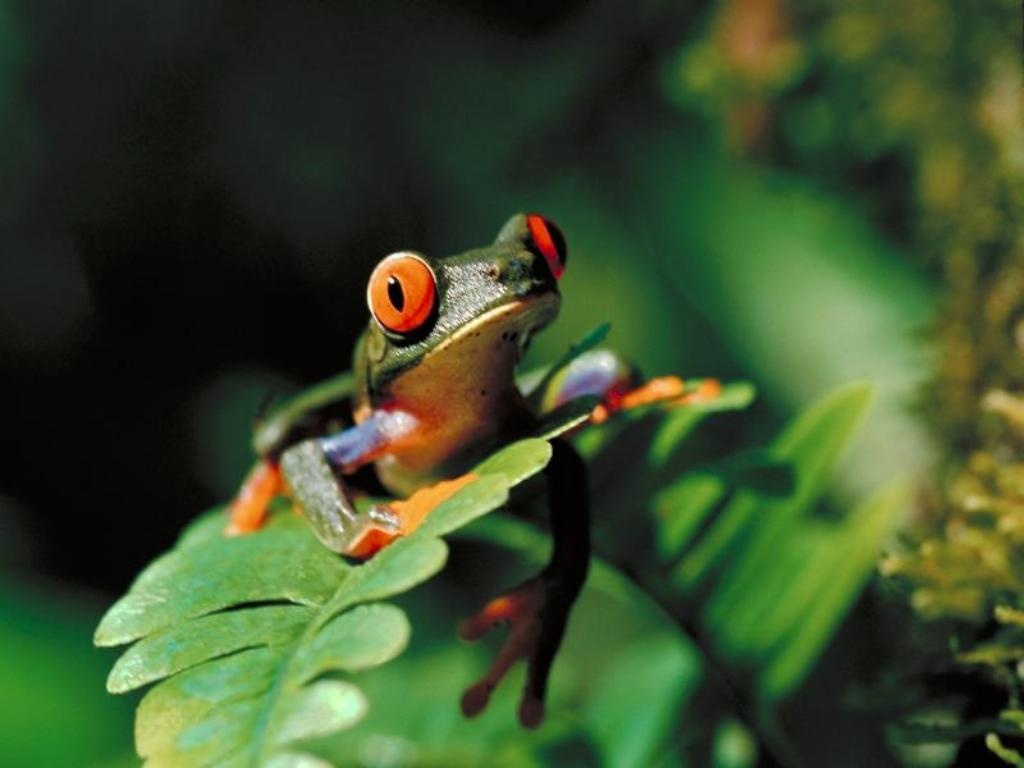
Frog Alone

"Who you lookin' at?"
. . . . . . . . . . . . . . . . . . . .
Funny Animal Photos
TwitThis
-------Australian Blog-------

Return on Savings to Fall

Banks are to significantly cut the return on money invested. This is not surprising considering the Reserve Bank of Australia (RBA) is cutting interest rates. As the banks follow the RBA down, which they are not obliged to do, they must cut outgoings on term deposits for example.

Considering banks make 60 per cent of their funds from various savings products, it is no wonder cutting what they pay out is on the horizon. If rates fall much lower people will be drawing out their savings and hiding their "loot" under the bed.

Customers are borrowing less because the bar for loans has been pushed too high. Well, perhaps that is a good thing. Australians were condemned for not saving enough; now they are criticized for not borrowing enough.

With an election date already set the government will push for full RBA flow-ons in the popular media. This does not look good for retirees who rely on money put aside in investments for their retirement. Money is getting cheaper in the wholesale market so fewer deposit options will be offered by the banks.
. . . . . . . . . . . . . . . . . . . . .
Economics
TwitThis
Australian Blog                        

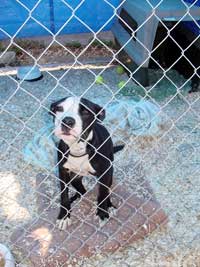
Dog in Jail

"If someone doesn't adopt me soon, I'm going to break out."
. . . . . . . . . . . . . . . . . . . .
Funny Animal Photos
TwitThis
-------Australian Blog-------

Spicy Food Stimulates the Same Endorphin Centers as Alcohol

It is well known that alcohol increases one's desire for spicy snacks. The personal drive not to eat is also weakened. This is why it is widely acceptable to head for the local curry shop after a drinking session.

It is believed that the two drives support each other. Those who like spicy food when they are sober tend to be heavy drinkers of alcohol. Both spicy food and alcohol stimulate the same centers in the brain. There is hope: spice lovers respond better to medication that reduces alcohol dependency.

It is all to do with the feel-good chemicals put out by the brain when stimulated. More endorphins are released by both substances. Because many people do not experience raised endorphins when consuming alcohol, drugs that lessens this affect do not work to stop alcohol consumption in them.

It was found that making "alcohol endorphin high" mice eat spicy food before offering them alcohol stopped them drinking as they were already getting the spicy high.

Apparently, there are two forms of alcohol dependency. One that is driven by endorphin highs and another in genetically 'low endorphin' people who crave alcohol for an unknown reason.
. . . . . . . . . . . . . . . . . . . . .
Society
TwitThis
Australian Blog                        

Nudge, Nudge, Wink, Wink!

"I get what I want around here. You know what I mean?"
. . . . . . . . . . . . . . . . . . . .
Funny Animal Photos
-------Australian Blog-------

Roo Loses Car Keys

"Where did I put those car keys?"
. . . . . . . . . . . . . . . . . . . .
Funny Animal Photos
TwitThis

New Zealand Wants Drivers to Wear Gloves

Calls from New Zealand to cover up one's hand by wearing gloves when driving a car is silly to say the least. This may be something to think about if one is a delivery van or a truck driver but ordinary people don't drive enough to warrant it. They say the belief that glass provides protection from ultraviolet radiation is a myth.

Sunscreen maker "Oasis Beauty" has suggested putting sunscreen on hands before driving. This is sound advice, coming from a producer of sunscreen. The International Agency for Research on Cancer says drivers should wear gloves, long sleeved shirts and sun glasses. Unless one is a professional driver this is a bit much.

Car producers state that laminated windscreens do block UV radiation: 80 percent of UV-a. It is side windows that are dangerous, though 37 percent of UV-a and 97 percent of UV-b are blocked. From these data obviously the New Zealand Cancer Society and Oasis Beauty are wrong and car glass does offer protection. Furthermore, most countries do allow side windows to be tinted which helps.
. . . . . . . . . . . . . . . . . . . . .
Society
TwitThis
Vista Computer Solutions Blog 
Australian Blog                       

Cat Nagger

"You're always nagging. Wha, wha, wha, wha."
. . . . . . . . . . . . . . . . . . . . .
Funny Animal Photos
TwitThis

Binge Drinking Causes Type 2 Diabetes

Drinking alcohol is not an innocent pastime. We know it damages the liver. However, a link has been found between binge drinking and the onset of type 2 diabetes. How it does this is not fully understood.

Rats were put on a "diet" of 3 g/kg of alcohol for only three days. Even when the alcohol had completely left their systems insulin resistance was still occurring. The effect lasted 54 hours after ingestion of alcohol had ceased.

Impaired adipose tissue and hepatic functions were believed to be the cause. There was more hypothalamic inflammation affecting insulin signaling.

There is hope for a treatment. Inhibiting brain protein tyrosine phosphatase 1B (PTP1B) can block the detrimental action  on insulin of binge drinking,
. . . . . . . . . . . . . . . . . . . . .
Society
TwitThis

The Real Thing

"I am not a puppet!"
. . . . . . . . . . . . . . . . . . . . .
Funny Animal Photos
TwitThis

Breakthrough in Artifical Intelligence

For a century now people have been assuming that robots will arrive and become commonplace in the home.  Manufacturing has its industrial robots but helping robots in the home have not become reality.  The problem is not so much being able to construct the physical aspects of a robot, it is the intelligence, the "brain", that is the big issue.

By doing 25,000 runs on a computer to build up experience, it was found that biological intelligence was structure into a network of modules.  This is a breakthrough finding for artificial intelligence.  Modules means alternatives can be chosen to meet a problem.  This is what makes humans and animals so difficult to understand.

Apparently, all things evolve via modules.  Such networks have not solely appeared out of intellectual necessity.  Modules can be joined together with shorter network connections, using less to make more.  Evolution is not wasteful. 

In the computer simulation, once a cost for network connections was added modules were formed.  Without the cost variable, there was no order to the simulation.  In animals modules are seen in the brain, metabolic networks, gene regulation, protein-protein interaction and the vascular system.  Even the Internet is modular.
. . . . . . . . . . . . . . . . . . . . .
Society
TwitThis